
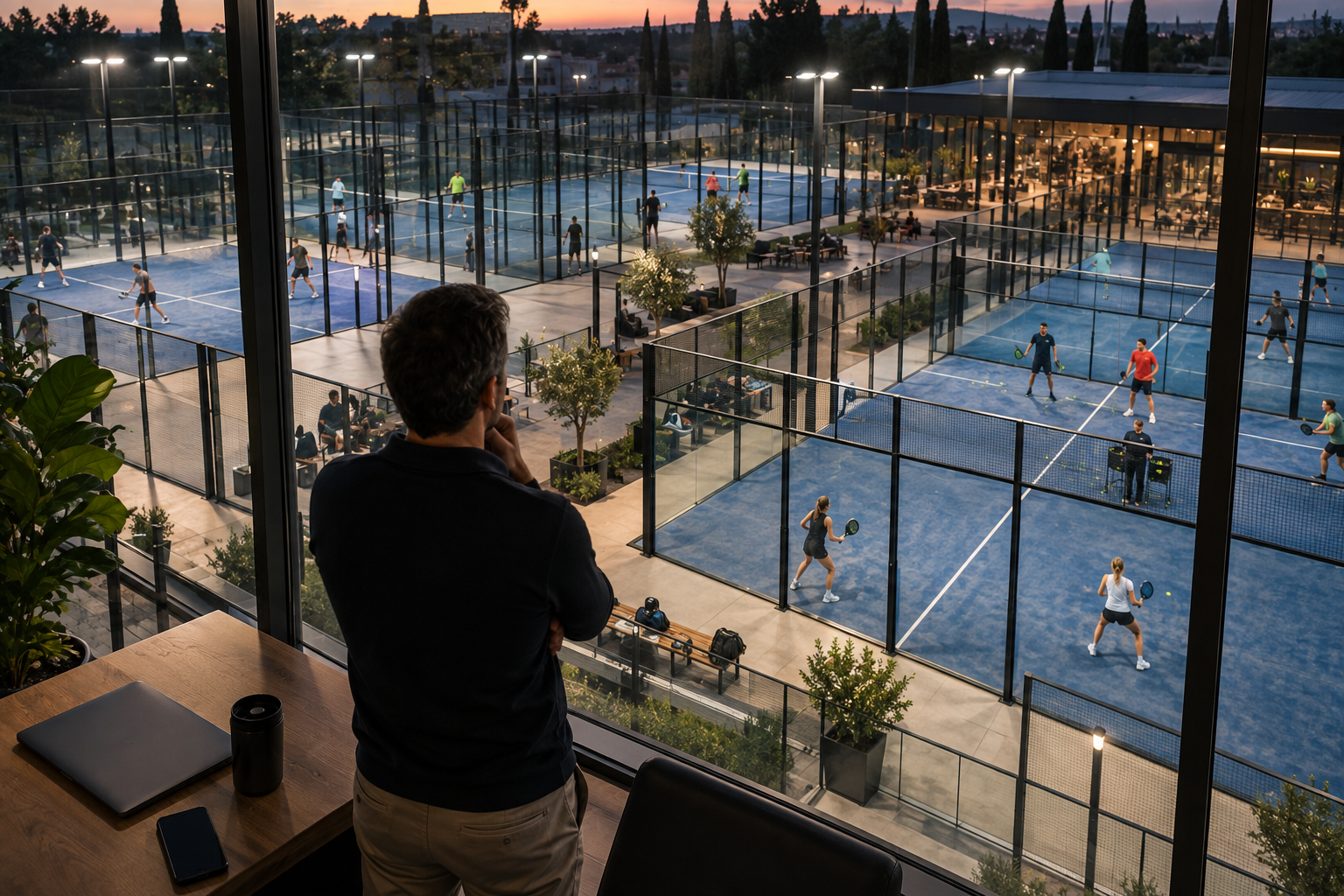
Organising a class does not mean knowing what happens in it
Managing a sports school involves much more than building a timetable. Dozens of training sessions can take place in a single week, and each one generates information: who attended, what was worked on, which exercises were used, what the coach had planned and what should come next.
The problem is not necessarily that this information does not exist. Often it does, but it is spread across conversations, notes, spreadsheets, the coach's experience and, in many cases, simply people's memory. The larger the school becomes, the harder it is to maintain an overall view.
“The problem is not always organising a school. The problem is knowing what is happening once activity begins on court.”
A simple question for any sports manager
Think about one group in your school. You know which players belong to it, its schedule and the coach assigned to it.
Now try to answer without asking the coach directly: who attended the latest sessions? What was worked on? Which exercises were used? What is planned for next week? Could another coach continue the group's work? Can the player easily review their activity?
If answering these questions means searching in several places or asking different people, part of the club's sporting activity is probably still disconnected.
The coach knows a great deal about what happens on court
And that should remain the case. The coach is alongside the player, observes their development, prepares sessions and adapts training to what happens on court.
Technology should not replace that judgement. It should help prevent useful information from disappearing when the class ends. Recorded attendance, a plan, the exercises used in a session or the work completed with a group may seem like small pieces of data, but connected over a season they can provide a much clearer picture of a school's activity.
From scheduling to sports management
There is an important difference between organising activity and managing sporting activity. The first mainly answers questions such as when we train, on which court, with which coach and who belongs to the group.
The second starts afterwards: what are we doing, what happened, what is planned next and how do we connect the club, coach and player? We believe this second layer is where technology can still improve the way clubs understand their sporting activity.
That is where MiP Padel comes in
When we started building MiP Padel, we began with a simple idea: connect the club, coach and player around what actually happens in training.
The club can organise its sporting structure and view its groups and activity. The coach can manage attendance, work with exercises and plan sessions. The player can check their calendar, manage attendance and access information related to their training.
Three different perspectives on the same activity, within one environment.
It should not create more work
There is an obvious risk when technology is introduced into processes that have worked for years: digitalisation can become another administrative task. If recording information takes too long, people will probably stop doing it. If a tool forces a coach to completely change the way they work, it is unlikely to become part of everyday practice.
That is why we believe a sports platform must be simple to use on court. Recording attendance should take seconds, checking a plan should be immediate and finding an exercise should not require navigating several tools. Technology makes sense when it removes friction rather than creating more of it.
A connected school creates something especially valuable: context
In isolation, knowing that several players had a class tells us very little. But when completed sessions, attendance, planning and the work carried out over several weeks can be connected, something different appears: context.
Context for the coach continuing to work with the group, for the club that wants to understand its sporting activity and for the player who wants a clearer view of their training. The goal is not to collect data for its own sake, but to make the information already generated by a school useful.
We are taking MiP onto the courts
MiP Padel is now entering an especially important stage for us: validation in real clubs. After building the platform, we want to understand how it fits into the everyday operation of different schools.
We want to observe, listen, identify friction, understand what creates value and improve what does not work as expected. We do not want clubs to adapt to MiP. We want to keep adapting MiP to the reality of clubs.
What really happens on your club's courts?
Probably much more than what appears on a timetable. There are training sessions, decisions, exercises, attendance, planning, communication and knowledge generated every week by the people who make up the school.
The point is not to control everything that happens. It is to connect the information that can genuinely be useful. That is what we are trying to build with MiP Padel, and now we want to do it together with clubs.